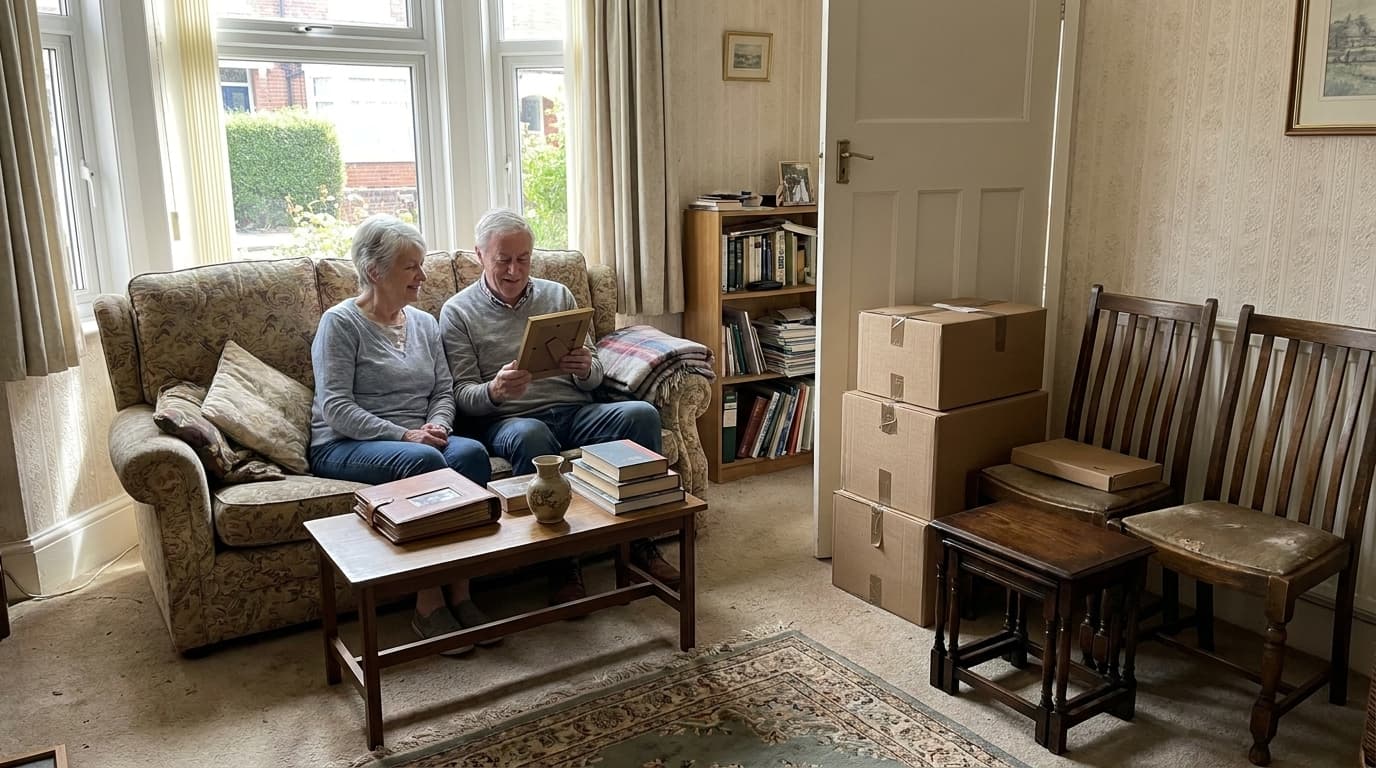
Moving to a smaller home is a big life change. Whether you're retiring, the children have left, or you simply want less space to maintain, the hardest part is often deciding what to do with everything you've accumulated over the years. This guide covers how to approach the clearance side of downsizing, from sorting your belongings to getting the property cleared and ready.
Why Downsizing Means Clearing Out
When you move from a larger home to a smaller one, not everything fits. A four-bedroom house worth of furniture, appliances, and possessions won't go into a two-bedroom flat. The maths simply doesn't work.
Rather than cramming everything into your new place and dealing with the overflow later, it's far easier to clear what you don't need before the move. You arrive at your new home with only the things you actually want, and the old property is left clear and ready for its new owners.
How to Decide What to Keep
This is usually the most difficult part. After years in the same home, everything feels familiar, and letting go can be hard. A practical approach helps:
Measure Your New Space
Before deciding on furniture, get the dimensions of your new home. Measure rooms, doorways, and corridors. That large wardrobe or corner sofa may not physically fit in the new property. Knowing this early saves difficult decisions on moving day.
Work Room by Room
Going through the entire house at once is overwhelming. Take it one room at a time. For each room, sort items into three groups:
- Taking with you. Essential items and things you genuinely use or love.
- Giving away or selling. Items in good condition that someone else could use.
- Clearing. Everything else. Broken items, things past their useful life, and items with no clear home in the new property.
Be Honest About What You Use
A good test: if you haven't used something in the past year, you probably won't miss it. This applies to kitchen gadgets, spare bedding, exercise equipment, tools, and the contents of that drawer everyone has (the one full of things that don't belong anywhere else).
What to Do with Items You're Not Keeping
Sell
Furniture, electronics, and household items in good condition can be sold online or through local groups. Start early if you plan to sell, as it takes time to list, respond to enquiries, and arrange collection.
Donate
Charity shops, community centres, and local organisations often welcome furniture, clothing, and household items. Some charities will even collect larger items from your home.
Pass On to Family
Downsizing is a natural time to pass on items to children, grandchildren, or other family members. If there are pieces of furniture or keepsakes that have sentimental value, offer them before they go into the clearance pile.
Professional Clearance
For everything that's left, a professional house clearance takes care of it. The team removes everything you don't want, loads it, and takes it away. No tip runs, no skip hire, no heavy lifting on your part.
Clearing Specific Areas
Some spaces accumulate more than others. If you've been in your home for a long time, these areas tend to need the most attention:
- Garage: Tools, paint tins, old bikes, garden equipment, and years of accumulated items. A garage clearance can handle this in one visit.
- Loft and attic: Boxes that haven't been opened in years, old suitcases, Christmas decorations you no longer need. An attic clearance removes everything, including the tricky job of getting items down from the loft.
- Shed and garden: Lawnmowers, garden furniture, pots, and outdoor equipment that won't suit your new property.
Timing Your Clearance
The best approach is to do the clearance before you move, not after. This way:
- Your removal company only moves items you're actually keeping, which keeps moving costs down.
- The old property is left empty and ready for the new owners or for sale.
- You're not juggling a clearance and unpacking at the same time.
Ideally, book the clearance a week or two before your moving date. This gives you time to finish sorting, and means the property is cleared with time to spare. If things move faster than expected, same-day clearance is available for urgent situations.
How Much Does It Cost?
Clearance costs depend on the volume of items being removed. If you've already sold or donated some things, the volume (and cost) comes down. For a detailed breakdown, see our guide to house clearance costs.
If you're weighing up between hiring a skip and using a clearance service, our house clearance vs skip hire comparison explains the trade-offs.
Making It Easier on Yourself
Downsizing can feel emotional, especially if you're leaving a home where you've spent many years. A few things that help:
- Start early. Give yourself weeks rather than days. Rushing makes every decision harder.
- Ask for help. Family, friends, or a professional clearance team can take the physical burden off your shoulders.
- Focus on the new home. Instead of thinking about what you're leaving behind, think about how you want your new space to feel.
- Take photos. If you're letting go of items with memories attached, photograph them first. The memory stays even when the item goes.
Getting Started
If you're planning a downsize and need help clearing your current property, we can take care of it. We handle clearances of any size, from a single garage to a full property. You tell us what needs to go, we give you an upfront price, and our team handles the rest.
For tips on what to do before the clearance team arrives, see our house clearance preparation checklist.